Most mining companies believe their record speaks for itself. It doesn’t. Not to the investor running due diligence, the insurer pricing a renewal, or the community deciding whether to trust a new project. They all ask the same question: can you prove it?
Digbee exists to answer that. It is the independent sustainability certification built for mining. Its frameworks assess a company from the inside, at exploration, development or production, and turn good practice into evidence the markets can act on.
On 16 November 2026 Digbee launched the most significant update to its Corporate and Project frameworks since they were first built. Both have been reworked question by question and now incorporate 51 global standards.
What are the Digbee frameworks?
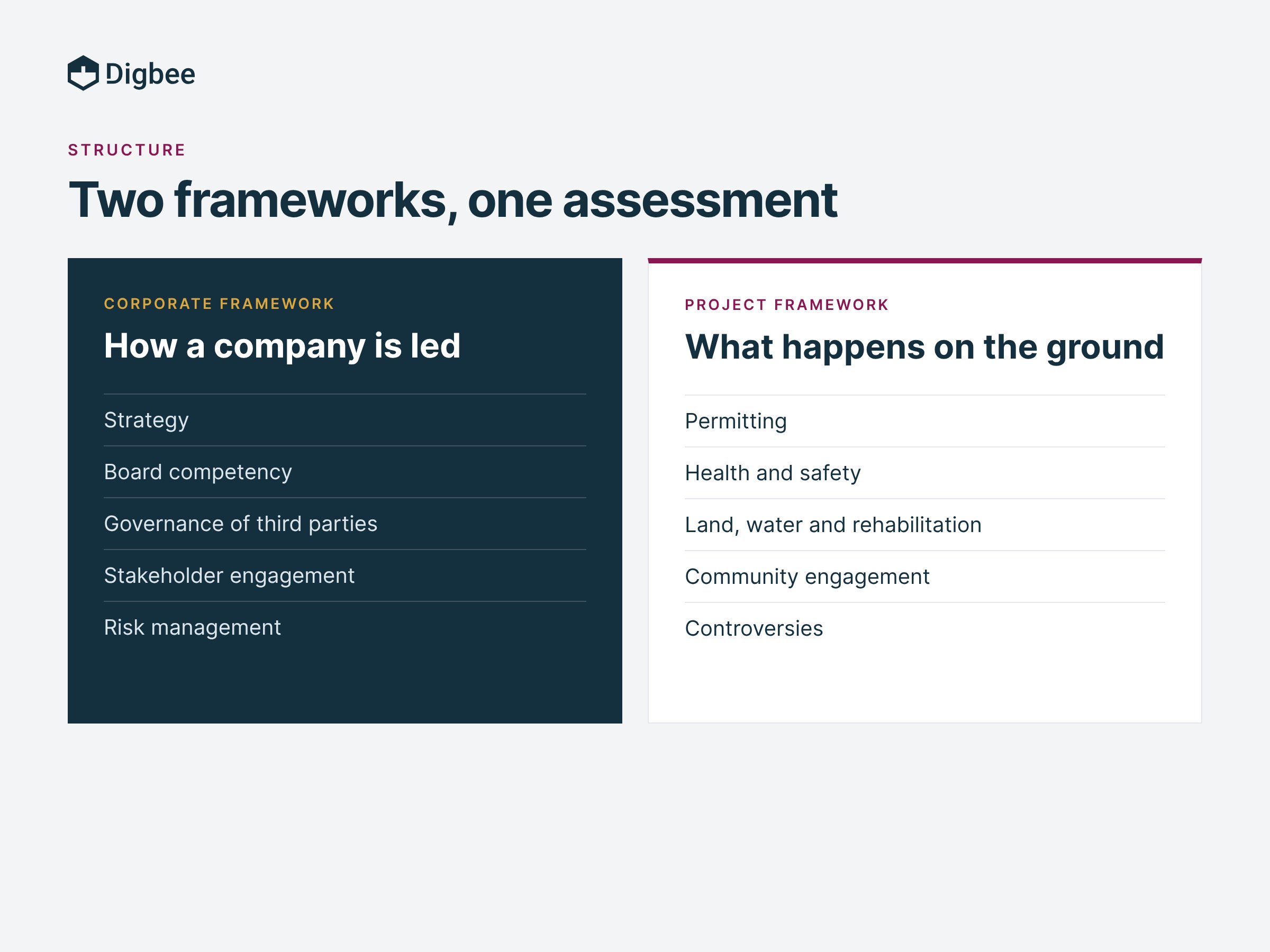
The 2026 frameworks are developed from the two-part structure that has underpinned every Digbee assessment to date. The Corporate framework assesses how a company is led: strategy, Board competency, governance of third parties, stakeholder engagement and risk management. The Project framework assesses what happens on the ground, from permitting and health and safety to land, water, rehabilitation and community engagement. It also tests how controversies are identified, managed and disclosed, an issue investors raise again and again.
The assessment is mining-specific, bottom-up, forward-looking and independent. It looks for proof of action, not a record of historical compliance. To our knowledge, it is the only independent sustainability assessment built specifically for mining and sized to each stage of a company’s life. It is recognised by Marsh, the world’s largest insurance broker. Digbee Reports are investor ready, and they are built so that every stakeholder, from the Board to the community, benefits from the same evidence.
Why size them by stage?
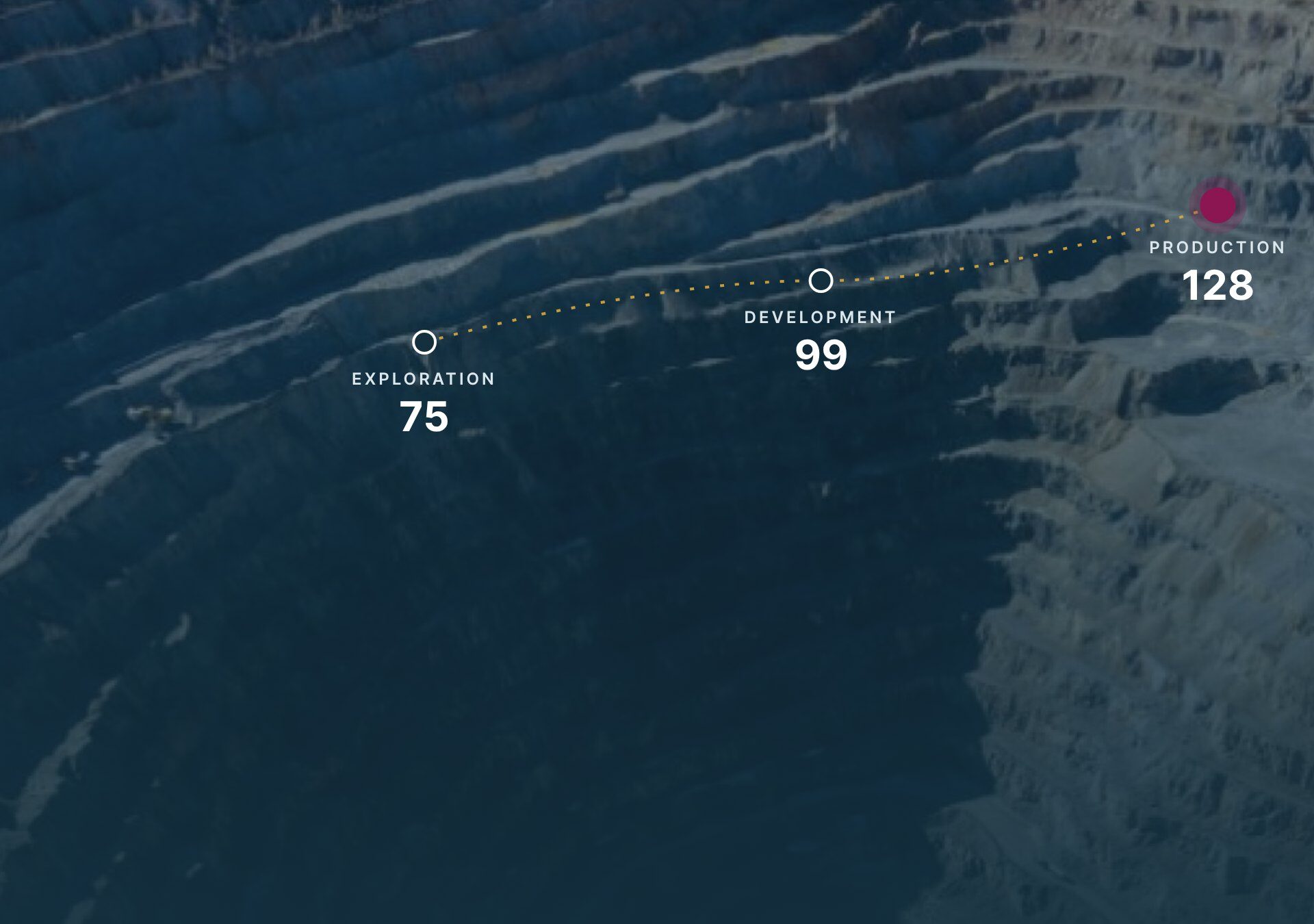
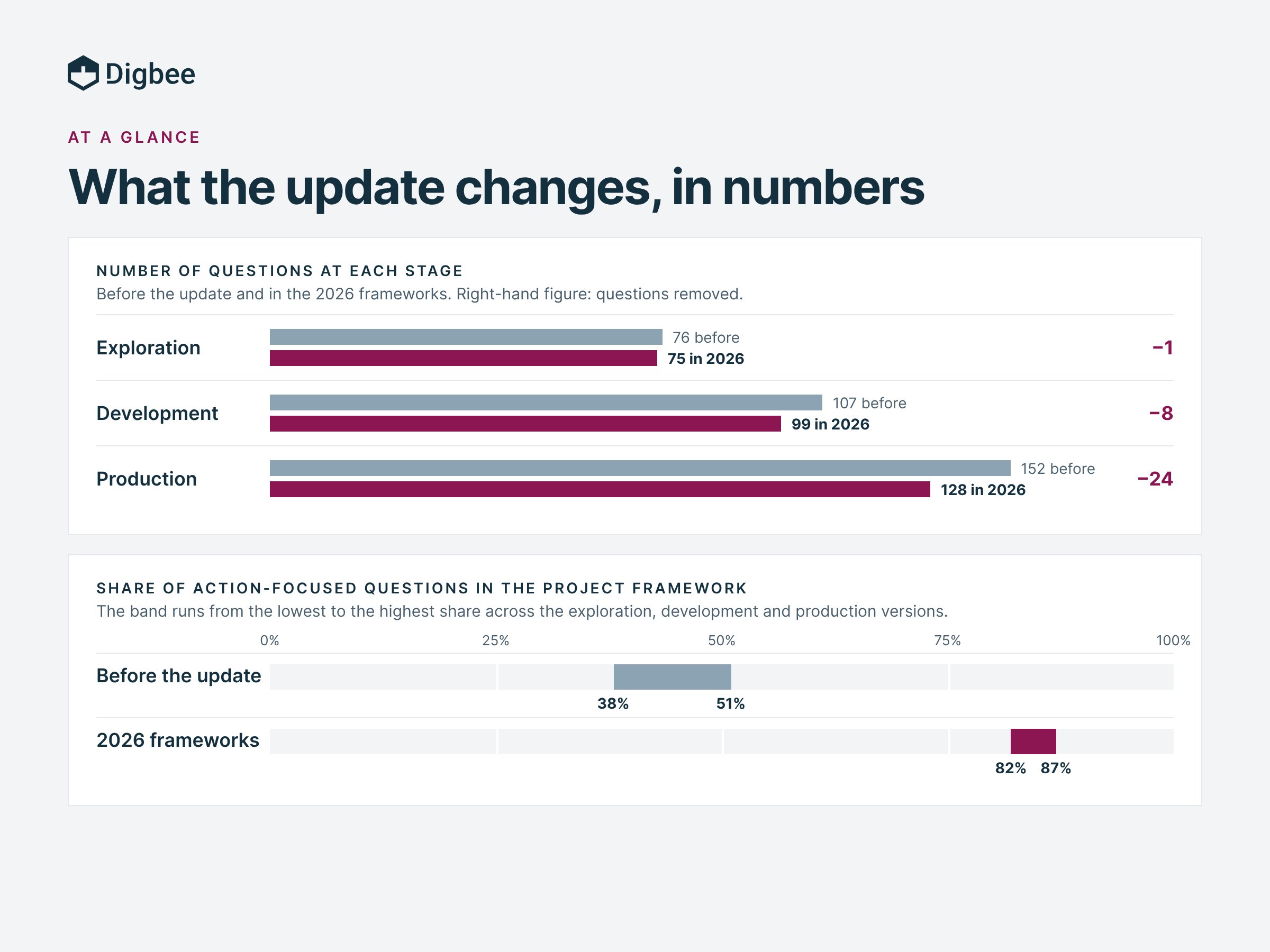
An explorer and a producer carry different risks. They should not answer the same questions. The frameworks are set at three stages: exploration (75 questions), development (99) and production (128).
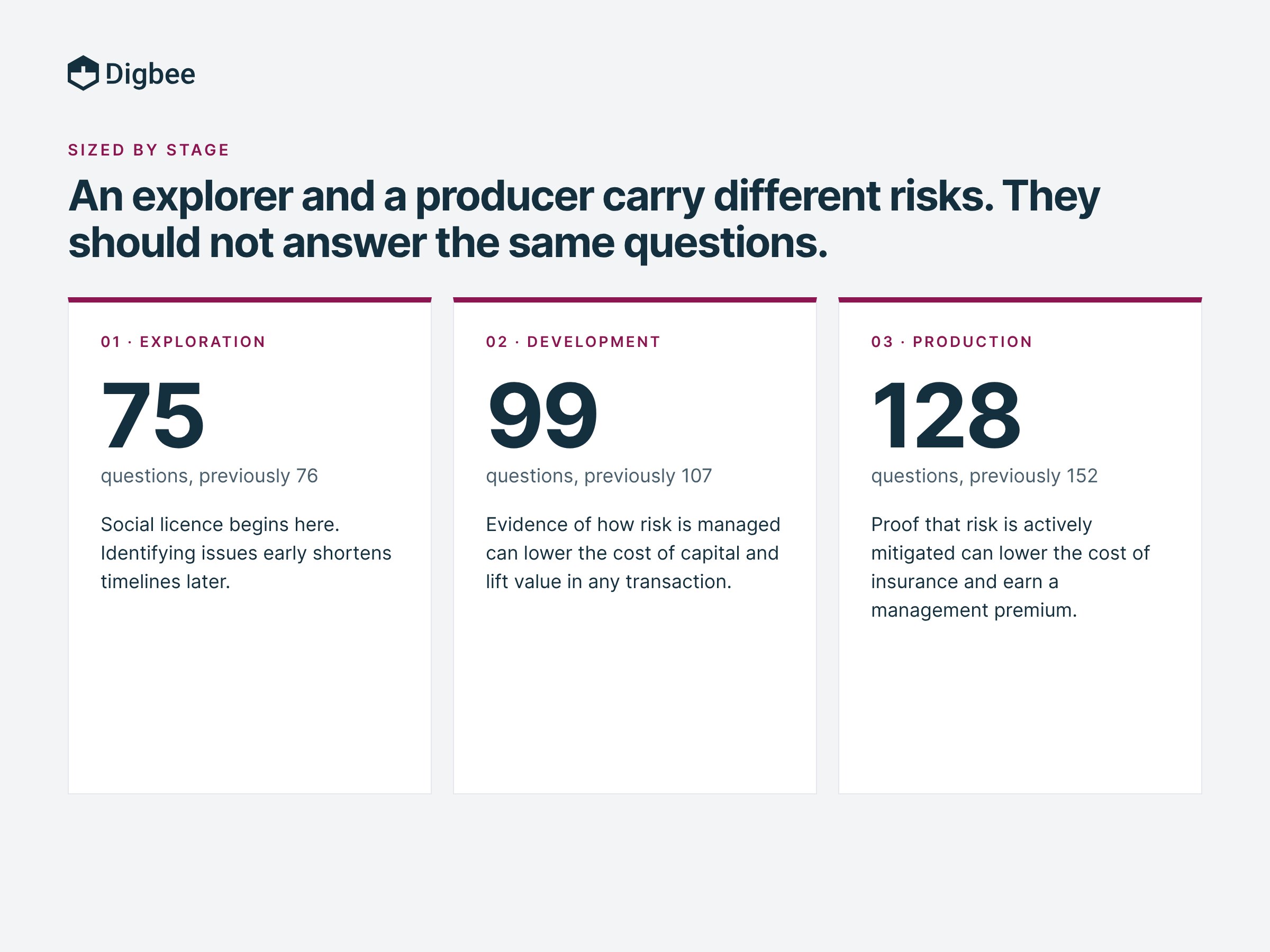
- Exploration. Social licence begins here. What an explorer does, or fails to do, sets the tone with a community for decades. Identifying issues early shortens timelines later and heads off the challenges that so often turn into significant costs.
- Development. The company is preparing for development, project finance and potential M&A. Early preparation mitigates delays and cost overruns, and evidence of how risk is managed can lower the cost of capital and lift value in any transaction.
- Production. Every stakeholder is pricing the company’s risk. Proof that risk is actively mitigated builds trust and drives proactive action. It can also lower the cost of insurance and earn a management premium in the market. Through Marsh Specie, Digbee-certified operators can already access preferential insurance terms.
Why update them now?
The demands on Boards and management teams are rising fast. Disclosure rules are tightening. And public perception is the hard truth behind permitting, access to capital and valuation.
The standards mining is measured against have changed. Nature-related risk has its own disclosure framework. Mining has its own GRI sector standard. The industry’s major standards are converging through the Consolidated Mining Standard Initiative (soon to be renamed The Global Mining Standard). Investors and insurers now ask for evidence of action, in a standardised and independent form. What they value is proven responsibility.
What are the main changes?
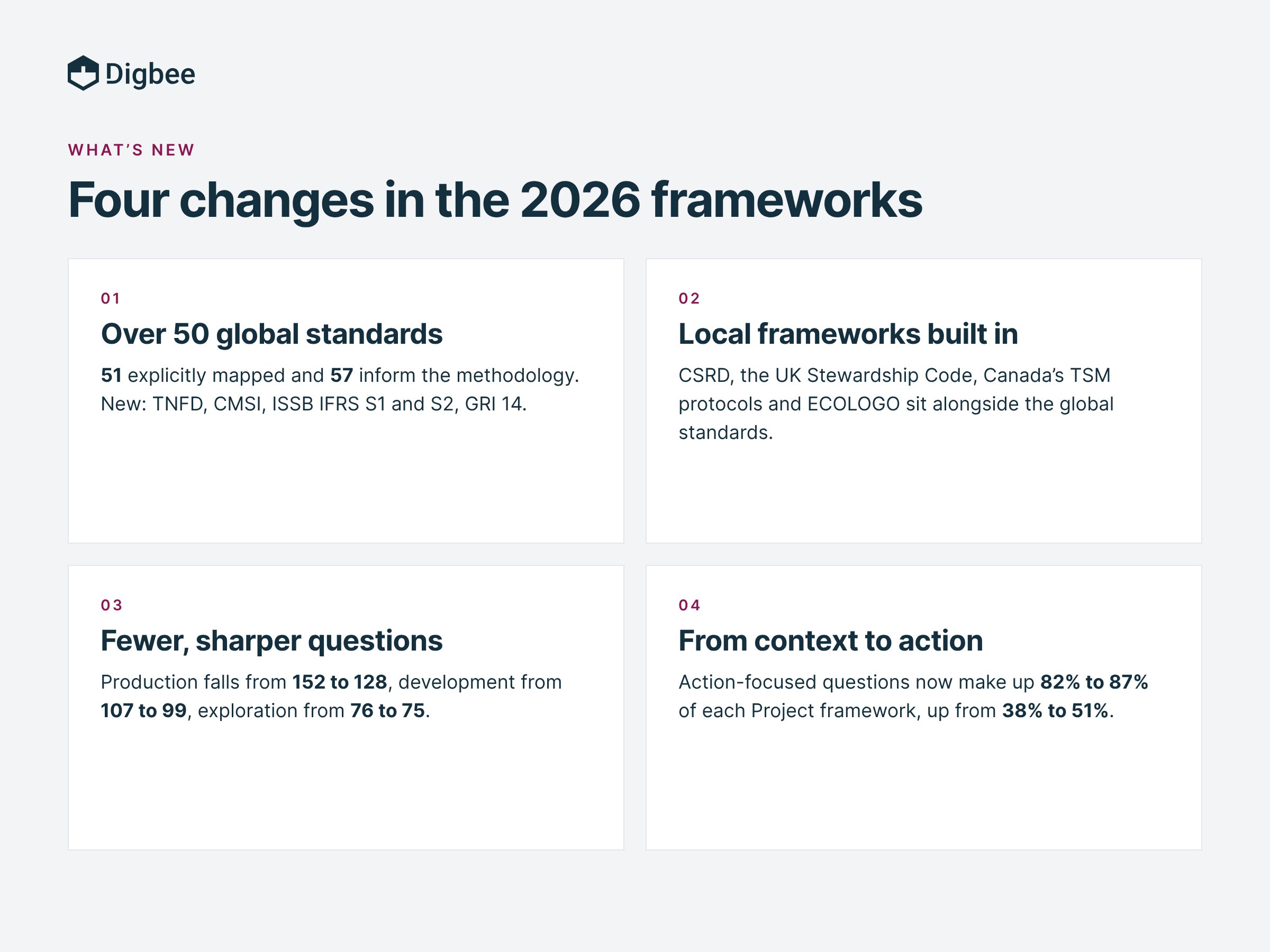
- Over 50 global standards. 51 are explicitly mapped, and 57 inform the methodology. New additions include TNFD, the CMSI Consolidated Standard (final consultation draft), ISSB IFRS S1 and S2, and GRI 14.
- Local frameworks built in. Global standards now sit alongside the jurisdictional frameworks companies answer to where they operate. These range from the EU’s CSRD and the UK Stewardship Code to Canada’s TSM protocols and ECOLOGO certification for responsible exploration. The methodology is built to take in further national frameworks as they are adopted.
- Fewer, sharper questions. Production falls from 152 to 128 questions, development from 107 to 99 and exploration from 76 to 75.
- From context to action. Action-focused questions now make up 82% to 87% of each Project framework, up from 38% to 51%.
Who developed the frameworks?
The 2026 frameworks were developed by Satarla, Digbee’s independent assessment partner. Its specialists carry out Digbee assessments worldwide, so the update is grounded in what they see on the ground.
Satarla is led by CEO and co-founder Dr Sarah Gordon, a former Anglo American geologist and head of sustainable development assurance, and an Honorary Lecturer at Imperial College London.
Earlier this year the draft frameworks went to open consultation. Mining companies, investors and other stakeholders were invited to test and challenge the questions before they were finalised.
The final frameworks were then reviewed by Digbee’s Independent Advisory team.
Dr Elaine Dorward-King was Executive Vice President of Sustainability and External Relations at Newmont, after 20 years at Rio Tinto, and has served on the boards of Sibanye-Stillwater, Kenmare Resources and NOVAGOLD.
Tom Butler was CEO of the International Council on Mining and Metals (ICMM) from 2015 to 2021, and before that Global Head of Mining at the International Finance Corporation.
How does this relate to the FCA regime?
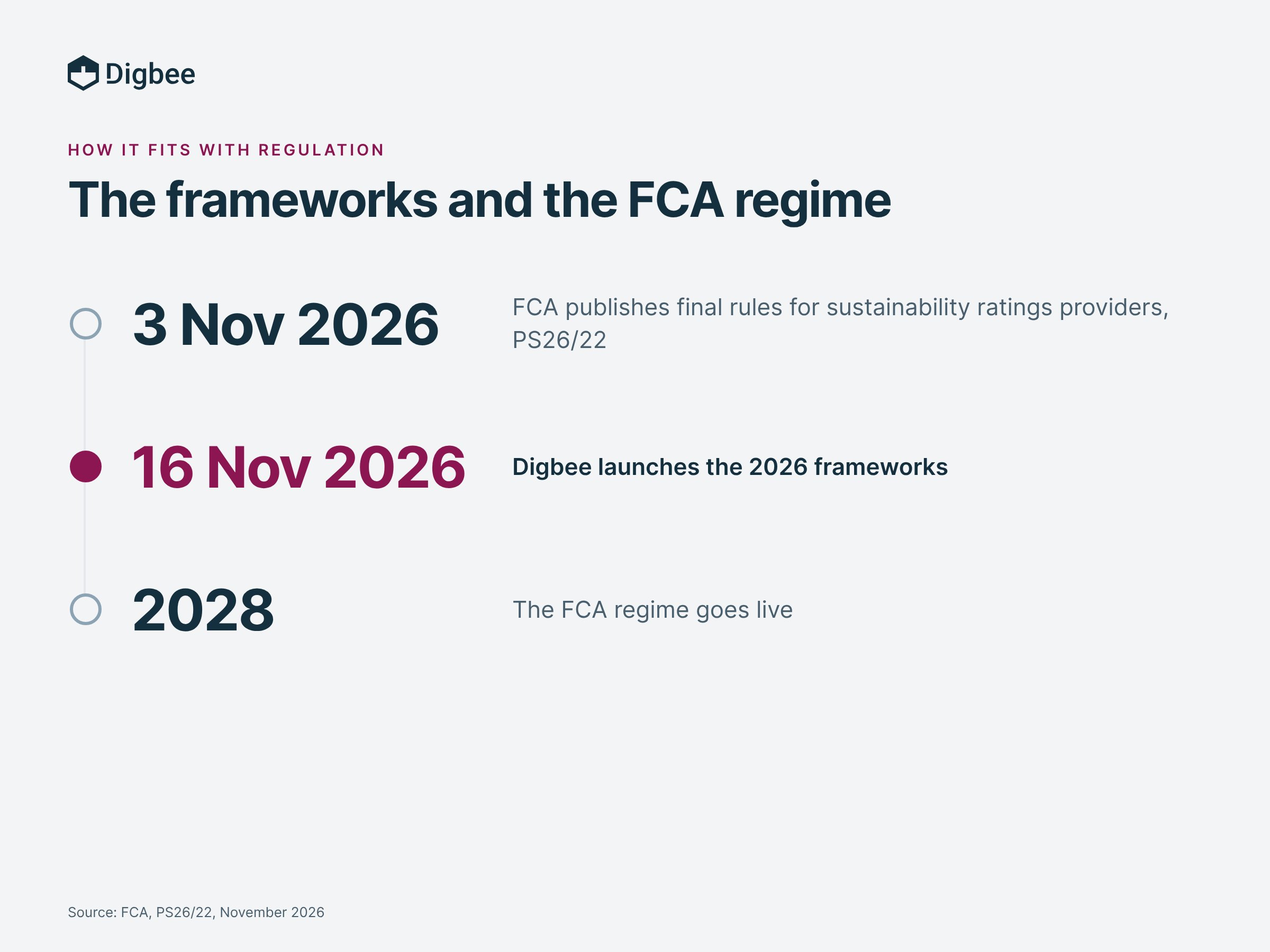
On 3 November 2026 the Financial Conduct Authority published its final rules for sustainability ratings providers (PS26/22), which go live in 2028 [1]. Digbee follows their principles of trust, transparency, robust governance and managing conflicts of interest as a minimum standard, whether or not the regime applies to it. That builds greater trust and accountability across the global mining industry [2]. For more on the rules, read why the UK’s new rules on sustainability ratings are good for global mining.
Satarla’s view
“Since the launch of Digbee in 2021, we have seen companies who have undergone the process make significant improvements to the management of their sustainability threats and opportunities. This has resulted in them not only being more resilient and attractive to investors, but also develop more robust relationships and trust with local communities, governments, suppliers, customers and future employees.
The context-specific and action-orientated style of the frameworks which assesses organisations based on both positive and negative aspects, allows for projects to be rewarded for the opportunities that they unlock within a region, as well as be pragmatically compared to other projects that may be experiencing similar risks.
Scoring teams are comprised of experts who have decades of experience in mining and exploration. Scores are debated and allocated in line with our established methodology. Reports are written because of this experience and knowledge of similar projects as well as today’s expectations.
We are excited to support the launch of the updated Digbee frameworks, and look forward to reviewing and reporting on improvements across the sector.”
Dr Sarah Gordon, CEO and co-founder, Satarla
What it means in practice
- Non-technical risks compound on capital projects. Permitting, community, contractor and governance risks rarely fail alone. One drives the next, and delays and cost overruns follow. Expanded project management and operations management sections now flag early where a project is under strain, before a lender or insurer finds it.
- Sustainability is a risk management discipline. ISSB now codifies what Digbee has asked from the start. Companies that run sustainability through enterprise risk management are already where regulation is heading.
- The test has moved from emissions to impact. The harder question now is what changes on the ground for people and communities. The social questions have been tightened to evidence that impact, not just report it.
- Being seen to do the right thing matters as much as doing it. Perception carries the weight of fact, and controversies set the narrative fast. Independent evidence of how they are handled is what makes good practice believable.
Digbee’s view
Responsibility is now priced. The companies that can prove it, independently and in a standard form, will raise, insure and operate on better terms. The 2026 frameworks are built to give them that proof.
To see how the 2026 frameworks apply to your company, book a walkthrough with the Digbee team.
Sources
- Financial Conduct Authority, Policy Statement PS26/22, November 2026.
- Satarla, UK regulation of sustainability ratings: what it means and how to prepare, 6 November 2026.